
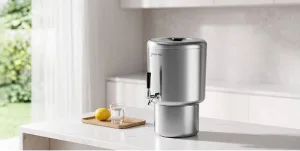
Water filtration can make everyday drinking water more convenient, especially for households that want a dedicated countertop solution. With several filtration technologies available, understanding how each method works can help consumers choose a product that suits their needs. Gravity-based systems are popular for their relatively simple design, since they use gravity rather than an electric pump to move water through filtration elements.
The Basic Principle of Gravity Filtration
A gravity water filter system generally contains two chambers. The upper chamber holds untreated water, while the lower chamber collects the water after it passes through the filters. Gravity gradually moves the water downward through the filtration elements.
The speed of filtration depends on several factors, including the filter material, water temperature, the amount of water in the upper chamber, and the condition of the filter. Unlike some powered systems, gravity models usually do not force water through the filtration media under high pressure.
A gravity water filter system can therefore be appealing to households looking for an uncomplicated way to store and gravity water filter system. Many countertop designs can be placed on a stable surface and used without a permanent plumbing connection, although setup requirements vary by product.
What Happens Inside the Filter?
The filtration process depends on the specific technology used in the filter element. Certain materials can trap suspended particles, while other filtration media may adsorb particular substances that affect taste or odor. Some products combine multiple materials to target different water-quality concerns.
However, filtration capabilities vary significantly between products. A filter that improves chlorine taste, for example, should not automatically be expected to remove dissolved salts, heavy metals, bacteria, or viruses. Consumers should consult the product’s technical documentation to understand what it can and cannot reduce.
The number of filtration elements is not, by itself, proof of superior performance. The materials used, the system’s design, independent test results, and maintenance requirements are more meaningful factors when comparing different models.
Why Some Households Prefer Gravity Systems
One of the main attractions of gravity filtration is that it does not require electricity to operate. This can be useful in households where people want a backup water-dispensing option during power interruptions. It can also be convenient in locations where installing a powered filtration system is impractical.
Many countertop models provide a reservoir that stores filtered water until it is needed. This can make it easier to fill glasses or reusable bottles throughout the day. Some systems use stainless-steel housings, while others are made from different materials.
Before choosing a gravity fed water filter, buyers should consider the available countertop space, storage capacity, expected daily consumption, and ease of cleaning. A larger reservoir may be useful for families, while a smaller model could suit an individual or a couple.
Understanding Filtration Claims and Certifications
Product descriptions often highlight the contaminants that a filter is intended to reduce. These claims should be reviewed carefully because the effectiveness of a filtration system depends on the specific contaminant, the filter’s condition, and the conditions under which it was tested.
Look for relevant independent testing or certification that supports the manufacturer’s stated performance. Check whether the documentation covers the complete system or only an individual filter component. Also, confirm that replacement filters are available and that their specifications match the original equipment.
If you have concerns about your household water, a water-quality report or laboratory test can help identify which treatment method is appropriate. This is particularly important for private wells and water sources with known contamination risks.
Cleaning and Filter Replacement
Routine care is essential for gravity fed water filter. Follow the manufacturer’s instructions for cleaning the chambers, handling filter elements, and replacing components. Avoid using cleaning chemicals or methods that could damage the filtration materials.
The recommended replacement interval may depend on the volume of water processed, the incoming water quality, and the particular filter design. Waiting until water tastes different is not a reliable way to determine whether a filter needs replacement.
Keeping the system clean and replacing its components on schedule can help maintain the intended performance and reduce the risk of problems caused by neglected storage chambers.
Conclusion
Gravity-based filtration uses a simple physical principle to move water through specialized filtration elements and into a storage chamber. A gravity water filter system can offer convenient access to filtered water without electricity, but its performance depends on the filter technology and the contaminants being targeted.
When comparing a gravity fed water filter with other options, examine verified filtration claims, system capacity, cleaning requirements, and replacement costs. Understanding these details makes it easier to select a product that matches your household’s water-quality needs.