
SPONSORED CONTENT -- (StatePoint) With spring here, homeowners are tending their lawns to boost curb appeal and create an ideal space for kids, pets and gatherings.
Whether you’ve been managing your landscaping for years or are just getting started, expert advice can help you tackle the toughest turf problems. Josh McGinnis, a Tractor Supply store manager in Fairview, Tennessee, shares his strategy for achieving a top-tier lawn.
Spring Clean Your Yard
McGinnis says the first step to becoming a “turf champion" is a thorough yard clearing. Winter often leaves behind fallen branches, pinecones and matted leaves. Raking debris improves appearance and protects grass health by preventing “smothering,” where wet leaf clumps kill grass and promote fungal disease. It also removes hazards that could clog your mower.
It’s Mow Time
If you’re purchasing a mower for the first time or are upgrading, consider your yard size and personal preference. Push mowers work well for smaller lots and limited storage, while riding mowers are more efficient for larger properties.
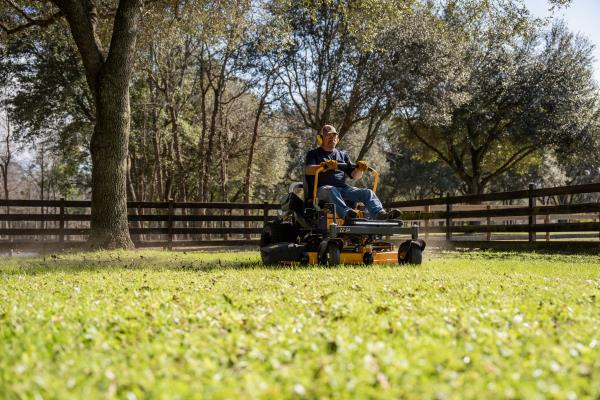
Zero-turn mowers, such as the Bad Boy Magnum 54-inch or Cub Cadet Ultima Series Z2 54, feature lap bars for precise steering and tight turns—ideal for navigating around landscaping. For large, open spaces, traditional riding mowers like the Cub Cadet Enduro Series 46-inch offer a more cost-effective option.
Conduct Mower Maintenance
For those with a mower already on standby, perform a full checkup before putting it to work:
1. Check the blades: McGinnis notes that dull blades tear grass instead of cutting it, increasing vulnerability to disease and browning. If the blades look worn, sharpen or replace them.
2. Freshen the fuel: Replace leftover gasoline. Completely drain the tank and refill it with fresh fuel.
3. Clean out the oil: McGinnis often hears from customers who stored their mower in a shed during winter and now struggle to bring it back to life. “If oil is left to sit in a mower, it can form a sludge that’s harmful to the engine,” he explains. “Lawn equipment needs to be winterized, but if it wasn’t, it’s not a lost cause. Just clean out any residue and start fresh.”
Focus on Timing and Technique
Homeowners may be itching to get outside, but patience is key. For the initial cut, McGinnis recommends waiting until the grass reaches 3–4 inches to ensure strong root establishment.
When it’s ready, avoid “scalping,” or cutting grass too short. McGinnis calls this the fastest way to ruin a yard.
“It exposes soil to the sun, drying out the roots and giving weed seeds the perfect environment to sprout,” McGinnis says.
Instead, he follows the “one-third rule”: never remove more than one-third of the grass blade at a time.
And whether it’s your first cut or fifth, always mow in dry conditions. Wet grass leads to clumping, clogged mower decks and uneven cuts.
Feed the Green
Mowing keeps your lawn neat, but it takes nourishment and know-how to keep it healthy. Start with a soil test to determine what your lawn needs to thrive, whether that’s lime to balance the pH or a specific nutrient boost.
For bare spots, spring is the best time to overseed. Just make sure you select a seed suited to your yard. Kentucky-31 Tall Fescue Grass Seed, for example, is very versatile and drought-tolerant, but needs full sun to grow. Pre-emergent weed control will stop your new grass seed from growing, so if you do apply weed control, wait six weeks before planting sod or grass seed.
For established lawns, McGinnis recommends a high-quality fertilizer to provide nitrogen for a deep green color. He suggests “slow-release” formulas to ensure the grass is fed consistently for an entire month.
Find lawn and garden tips, tools and products at tractorsupply.com/spring. If you’re unsure which products are right for your region, or need help troubleshooting unique challenges, McGinnis suggests taking photos of the yard and visiting your local Tractor Supply store for expert guidance.
“Lawn care isn't a sprint; it's a season-long commitment,” McGinnis concludes. “Treating grass right now will pay dividends all summer.”